
|
|
|
|---|
Showing posts with label turbocharger. Show all posts
Showing posts with label turbocharger. Show all posts
Thursday, July 29, 2010
Ford Explorer (2011)

Friday, July 23, 2010
Bentley Continental GTC

The construction and packaging of the roof are second to none. Its designers were keen that absolutely all working parts would be covered, which means that whether you are inside the car as the roof is in operation or watching from the outside, not one piece of the mechanism will be visible. The roof comes with a heated glass rear window and also an interior rooflamp in the headlining. It can be operated after pulling away from standstill at speeds up to 30km/h (20mph).
The Continental GTC is powered by Bentley's magnificent W12 twin-turbocharged 6.0-litre engine, which will propel the car to 60mph in 4.8 seconds and on to a top speed of 195mph (312km/h). This awe-inspiring piece of engineering is identical to the unit used in the coupé and four-door versions of the Continental and delivers phenomenal power (552bhp/411kW) as well as that legendary wave of torque (479lb ft/650Nm) from low revs that is the hallmark of every Bentley.
The 12-cylinder block has a 48-valve head with four camshafts that operate using continually variable valve-timing. Power is transmitted via a seven-bearing crankshaft to the car's six-speed automatic transmission. To ensure compliance stringent emissions regulations, the twin turbochargers are designed with a unique bypass valve that automatically sends exhaust gases to heat the catalytic converters when the car is started from cold. This valve then operates as the turbocharger wastegate at all other times.
The Borg-Warner turbochargers are also the ideal solution for producing the flat torque curve, ensuring that the driver has instantly available performance without a hint of turbo lag or having to shift down through the gears. That mighty torque curve is constant, with no drop-off from its maximum output of 479lb ft (650Nm) at just 1600 rev/min all the way up to 6000 rev/min.
Bentley Continental GT Speed

The resultant performance is exceptional, with a top speed of 202mph (326km/h), a zero to 60mph sprint time of just 4.3 seconds (0-100km/h in 4.5s) and effortless overtaking capability. Both the GT Speed and the 552bhp (560PS) Continental GT benefit from internal efficiency improvements to deliver reduced fuel consumption and CO2 emissions. The Continental GT remains outstandingly quick its top speed is unchanged at 198mph (318km/h), with a 0-60mph sprint time of 4.6 seconds (0-100km/h in 4.8s). At the heart of both Continental GT models is the Bentley 6-litre, twin turbocharged W12 engine, the most compact 12-cylinder engine in production. The 48-valve head employs four camshafts and continually variable valve-timing. Power is transmitted via a ZF six-speed automatic transmission. For the Continental GT, the engine continues to produce 552bhp (560PS / 412kW) at 6100 rev/min and a maximum torque of 650Nm (479lb ft) from1600 rev/min.
The twin, low-inertia turbochargers are a key factor in producing the flat torque curve, characteristic of every Bentley. A new higher output of the W12 engine is specified for the GT Speed, sharing engine efficiency improvements with the GT model. New lighter weight con rods enhance engine response, while new pistons, with anodised compression ring grooves, are designed to withstand increased cylinder pressures. Together with a recalibrated version of the new engine management system, the GT Speed develops nine percent more power than the GT - 600bhp (610PS) at 6000 rev/min. The maximum torque of 750Nm (553lb ft) at 1750 rev/min represents an increase of over 15 percent versus the standard engine. As a result, the GT Speed becomes the first production Bentley to top 200mph (322km/h), with a V-max of 202mph (326km/h). The lightweight, fade-resistant braking system minimises disc distortion under high thermal conditions. Under normal driving conditions the brake discs will last the lifetime of the car. Furthermore, brake pad life is doubled compared with the standard braking system. Complementing the braking systems of both Continental GT models are sophisticated safety systems, including Hydraulic Braking Assistance (HBA), anti-lock braking (ABS), drag torque control (MSR) and Electronic Brakeforce Distribution (EBD). This Bentley features single tone, hide-trimmed multi-function steering wheel in a 4-spoke design,Footpedal with Bentley ‘B’ emblem, Hide and chrome trimmed gear lever with manual shift change facility.
Bentley Arnage Final Series

The iPod interface links to the Infotainment system and enables customers to play their favourite music through the car’s audio system. Supplied with connectors for iPod, USB, Mini USB and a 3.5mm AUX jack. Includes a 12 volt power outlet for charging purposes.The Bentley Arnage Final Series features rear remote control enables the rear seat passengers to control the infotainment system. When not in use it can be stored in a dedicated pouch inside the rear centre armrest.
The Naim for Bentley is a world class audio system delivers the world’s best in-car sound stage. Created in partnership with Bentley by Naim Audio, a UK-based high end hi-fi manufacturer, this system features 10 speakers, a dual channel sub-woofer and a 1100 watt amplifier the world’s most powerful production unit fitted in a car. Bentley is also the first car manufacturer to use a next-generation Digital Signal Processor (DSP) in its audio system which features eight individual modes to reproduce true emotions and a ‘live’ concert-like experience. The engine, transmission, chassis and running gear of the Arnage Final Series are identical to those previously employed in Arnage T. In this specification, Bentley’s remarkable all-aluminium 6 ¾ litre V8 engine produces 500 bhp (507PS/373kW) and 1000 Nm (738lb ft) of torque – figures that ensure that the legendary Bentley ‘wave of torque’ delivers effortless performance for a unique driving experience. Acceleration to 60 mph is accomplished in 5.2 seconds (0-100km/h in 5.5 secs) with 100 mph reached in 12.1 seconds (0-160km/h in 12.0 seconds). Top speed of the Final Series is 179 mph / 288 km/h. Each V8 engine bears the signature of the team leader. The six-speed ZF automatic transmission, first introduced for the 2007 model, ensures optimum flexibility, response and refinement. Three transmission modes (Drive, Sport and Semi-Automatic) allow the driver to take full advantage of the powerful 500 bhp V8 engine. the Arnage with impressive body control in all driving conditions, while the new five-spoke, two-piece 8.5J x 20-inch Sports alloy wheels with 255/40 ZR20 Pirelli P Zero tyres originally developed for the Brooklands coupe – aid handling and road holding. The V8 engine underwent perhaps its most extensive development in 2006 taking power to 500 bhp and torque to 1000 Nm. The introduction of two low-inertia, quick-reacting turbochargers that operate with far greater efficiency at lower engine speeds, reach maximum turbine speed in half the time of the previous units.
Wednesday, July 21, 2010
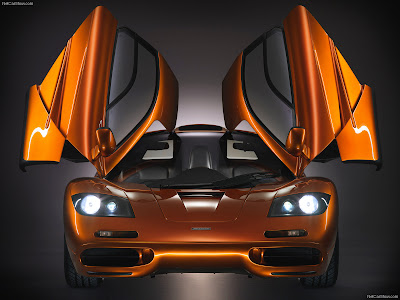
McLaren F1 (1993)
ABT Audi TT-Limited Wide Body

Monday, June 28, 2010
Bugatti Veyron Sang Noir

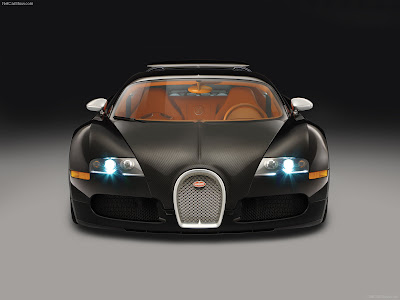
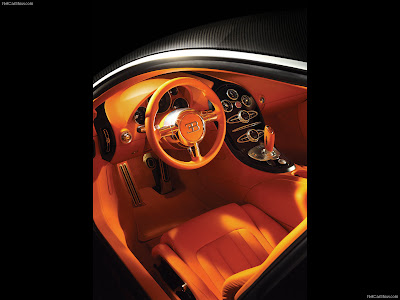
The Bugatti Veyron Sang Noir is a special edition, created for the true automotive connoisseur.Similar to its thoroughbred predecessor, the Type 57S Atlantic, the Bugatti Veyron Sang Noir exposes a raptor-like DNA that is reflected throughout the entire model history of the marque..The Bugatti Veyron Sang Noir is a special edition, created for the true automotive connoisseur.The 16-cylinder "W" configuration engine is fed by four turbochargers and features 64 valves, generating 1001 horsepower at 6000 rpm. The engine draws on its 8-litre displacement to deliver a maximum torque of 1250 Newton-metres between 2200 and 5500 rpm. Apply the brakes at speeds above 200 km/h, and the rear wing acts as an airbrake, positioning itself at an angle of 113 degrees in less than 0.4 seconds, augmenting the Bugatti Veyron's already impressive stopping power. The airbrake increases negative lift at the rear of the car to 300 kg, enhancing the braking torque on the rear axle. At 400 km/h, emergency braking will bring the sports car to a complete halt in less than 10 seconds.This striking and unparalleled harmony between luxury and sportiness is complemented by alloy-coloured details in the form of the chromed Bugatti grill and door-mirrors, as well as polished wheel surfaces and roof-rails. All-black front lights, air intakes, filler caps and door-handles naturally heighten the stunning effect of the racing-blue brake callipers.
Bugatti Veyron Fbg par Hermes
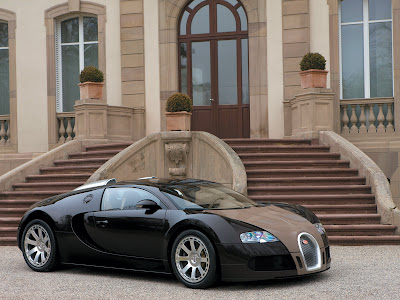


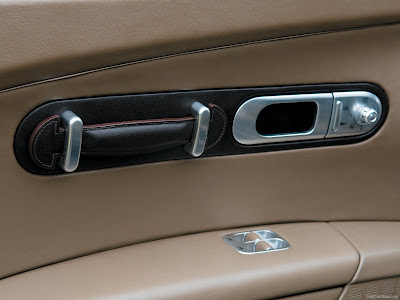
The "Bugatti Veyron Fbg par Hermès", associat-ing Bugatti's technical performance with the expertise of Hermès and its craftsmen.The fascination exerted by this sports coupé, capable of reaching 407 km/h.The 16-cylinder "W" configuration engine is fed by four turbochargers and features 64 valves, generating 1001 horsepower at 6000 rpm. The engine draws on its 8-litre displacement to deliver a maximum torque of 1250 Newton-metres between 2200 and 5500 rpm. With full-time all-wheel drive, the car's phenomenal power produces breathtakingly dynamic handling, with acceleration from 0 to 100 km/h in a mere 2.5 seconds. Apply the brakes at speeds above 200 km/h, and the rear wing acts as an airbrake, positioning itself at an angle of 113 degrees in less than 0.4 seconds, augmenting the Bugatti Veyron's already impressive stopping power. The airbrake increases negative lift at the rear of the car to 300 kg, enhancing the braking torque on the rear axle. At 400 km/h, emergency braking will bring the sports car to a complete halt in less than 10 seconds.This exceptional model - in toning colours of ebony and étoupe, or ebony and brick - is priced at 1.55 million euros (not including tax), available at the end of 2008.
Tuesday, June 22, 2010
2012 BMW M6
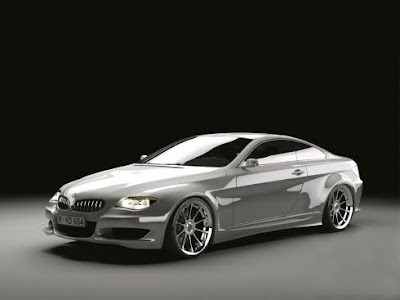

BMW M6 is expected to have a sleeker design, rear headlights closely resembling the BMW CS Concept, and some sporty wheels, probably 21″. It is not sure whether the 2012 BMW M6 will have a carbon fiber roof or a glass roof, and how its hood will look like. The present generation BMW M6 already churns out 500hp, and with further tweaking it can easily deliver 650+ hp, with the help of a turbocharger, other performance parts or a BMW M6 engine stroker.
Sunday, June 20, 2010
Audi TTS Coupe

The Audi TTS Coupe, both in Coupé and Roadster body styles, combines enthralling sportiness with cultivated comfort. Its two-liter TFSI with the large turbocharger and numerous additional modifications pumps out 200 kW (272 hp) and 350 Nm (258.15 lb-ft) of torque, the latter from 2,500 to 5,000 rpm. With the optional six-speed S tronic, the Audi TTS Coupé sprints from zero to 100 km/h (62.14 mph) in 5.2 seconds and accelerates all the way to an electronically governed top speed of 250 km/h (155.34 mph). The Audi TTS Coupe with the S tronic consumes an average of only 7.7 liters of fuel per 100 km (30.55 US mpg).
18-inch wheels with 245/40-series tires, the Audi magnetic ride adaptive shock absorber system, the Sport button and a powerful brake system with four internally ventilated discs make the Audi TTS Coupe extremely dynamic. The body, which has been lowered 10 millimeters (0.39 in) versus the volume model, was given a series of design updates. It extends automatically at 120 km/h (74.56 mph) and retracts again below 80 km/h (49.71 mph). The driver can also activate it at any time via a switch.
Audi TTS Coupe underbody is nearly completely smooth, which improves the flow of air around the car. Both body styles have grown 9 millimeters (0.35 in) and now measure 4,187 millimeters (13.74 ft) in length. The width of 1,842 millimeters (6.04 ft) and the height of 1,352 millimeters (4.44 ft) and 1,357 millimeters (4.45 ft) for the Coupé and Roadster, respectively, remain unchanged. The wheelbase measures 2,468 millimeters (8.10 ft).
Saturday, June 19, 2010
Chrysler ME412

Mercedes benz E-Class

The New Mercedes benz E-Class in a new four-cylinder diesel engine also powers the E 220 CDI with 125 kW/ 170 hp and the E 200 CDI with 100 kW/136 hp, also with a fuel consumption of only 5.3 litres per 100 kilometres.The top model in the new Mercedes-Benz E-Class diesel range is the six-cylinder E 350 CDI with an output of 170 kW/231 hp, which uses 0.5 litres per 100 kilometres less fuel than the previous E 320 CDI.
Saturday, June 12, 2010
Audi Le Mans Quattro R8

Monday, April 19, 2010
2011 BMW X5

2011 BMW X5 will write the latest chapter in the story of the world's first Sports Activity Vehicle® in the spring of 2010. Originally launched for the 2000 model year in late 1999, the BMW X5 permanently changed the automotive landscape. It proved that the driving dynamics, responsiveness, and linear control signature to every BMW could be compatible with utility, versatility, and other-roads capability. For 2011, the BMW X5 models are enhanced with new powertrains and updated design. The new BMW X5 will make its North American debut at the 2010 New York International Auto Show.
Innovative new design elements and powertrains are the result of over 4,000 new parts created by BMW designers and engineers for the 2011 BMW X5. Two of the X5's powertrains will be all-new for 2011, creating the new BMW X5 xDrive50i and BMW X5 xDrive35i, in addition to the familiar BMW Advanced Diesel X5 xDrive35d. All models receive a design update that enhances the brilliant focus and aesthetic appearance of the X5 brand.
Fresh Design. Well-Balanced Proportions.
The body design of the 2011 BMW X5 is characterized by well-balanced proportions that accentuate the vehicle's powerful presence and agility. A long wheelbase, short front and rear body overhangs, and large light-alloy wheels provide a visual balance between the front and rear of the vehicle. Square-shaped, carefully flared wheel arches hint at the BMW X5's all-wheel drive traction and other-roads capability. The body lines sweep upwards from the front and rear wheels, communicating BMW's near-perfect 50-50 front-rear weight distribution which is so essential to the BMW X5's legendary driving dynamic.
The sides of the BMW X5 are elegantly stretched though the strong horizontal lines of each side. The surface of the hood flows seamlessly into the waiseline, while the prominent, gently inclined contour line at the door handle level extends from the front wheel arches to the rear of the vehicle. These character lines symbolize power, stability, and presence.
With its distinctively contoured hood, large BMW kidney grille and dual round headlights, the new BMW X5 boasts an expressive front end that symbolizes power and presence. The newest interpretation of the BMW X5's look is led by the redesign of the front fascia and position of the standard foglamps. Due to an increase in the number of elements painted body color, the front end gives the impression of being lower. At the same time, the increased size of both the central and outer air intakes hint at the boosted engine output. The black trim at the bottom edge of the body is now considerably narrower. A matte-finished silver protection plate extends across the entire width of the central air intake, emphasizing the muscular features of the SAV, and accentuates the new BMW X5's character.
The dual round Xenon Adaptive headlights and foglamps are now situated higher and closer to the kidney grille. The BMW X5's new headlight fixtures emphasize high quality and sporting intentions. BMW's signature corona rings serve as position lights and daytime driving lights.
The newly conceived rear apron matches the graphic structure of the front end, while the intricately designed surrounds of the dual exhaust pipes are painted in body color to underline the BMW X5's premium character. In the center, a matte-finished silver protection element emphasizes strength and durability suitable for other-roads use.
Above the rear bumper, the rear of the new X5 is divided by parallel horizontal lines. The result is an accentuation of the width, highlighting the vehicle's athletic capabilities. The L-shaped taillight fixtures, each with two LED light banks, create the BMW-signature nighttime appearance of the rear end.
A choice of new body colors provides further visual enhancements. The metallic colors Deep Sea Blue, Platinum Grey, and Sparkling Bronze are now available for the BMW X5. Inside, the available Nevada Leather can be chosen in stunning new Oyster or Cinnamon Brown colors in addition to the familiar Sand Beige, and Black, and matte Satin Silver interior trim strips are added if the owner does not select from the available Brushed Aluminum, Dark Bamboo, Light Poplar, or Burl Walnut wood trims.
BMW X5 xDrive50i: BMW's Twin-Turbocharged V-8.
The new BMW X5 xDrive50i takes its place as the flagship of the X5 family, yielding 400 horsepower at 5,500 rpm and 450 lb-ft of torque at 1,750 - 4,500 rpm from its twin-turbocharged 4.4 liter V-8 engine. Introduced in the BMW X6 in Spring of 2008, this all-aluminum V-8 features High Precision direct fuel injection, "reverse-flow" architecture for revolutionary responsiveness and packaging, and BMW' s VANOS variable valve timing technology. Together, these features create what may be the perfect balance between high fuel efficiency, low emissions, and the dominant, dynamic performance expected of a BMW V-8. The 0-60 mph sprint is accomplished in 5.3 seconds.
BMW X5 xDrive50i starts at $59,275 including Destination & Handling.
As part of the V-8 engine's reverse-flow architecture, the twin turbochargers are situated in the valley of the engine's "V" and exhale separately into two catalytic converters which are located on top of the engine and exit aftward into the large stainless-steel exhaust system via downpipes on either side of the new 8-speed automatic transmission. The exhaust streams remain separated until they meet in the large muffler at the rear of the vehicle and exit through two large, trapezoidal exhaust tips.
Sunday, October 11, 2009
1985 Audi Sport quattro S1


The Audi Sport Quattro S1 was introduced at the end of 1984 as an update to the Audi Sport Quattro. The car featured a inline 5-cylinder engine that displaced 2,110 cc (128.8 cu in) and produced an officialy quoted figure of 350 kW (480 PS/470 bhp). However, the turbocharger utilised a recirculating air system, with the aim of keeping the turbo spinning at high speed, and the actual figure was in excess of 500 bhp (373 kW/507 PS) at 8000 rpm. In addition to the improved power output, an aggressive aerodynamic kit was added that featured very distinctive wings and spoilers to the front and rear of the car to increase downforce. The weight was lightened to just 1,090 kg , and now accelerate from 0-100 km/h (62 mph) in just 3.1 seconds. Some of the cars were supplied with a "power-shift gearbox", which is said to be a forerunner of today's Direct-Shift Gearbox technology. The S1 proved to be an immediate success in the rally circuit, helping Walter Röhrl and Christian Geistdörfer win the 1985 San Remo Rally. A modified version of the S1, was also driven by Michèle Mouton. The S1 evolution would become the final Group B car produced by Audi, with the works team withdrawing from the Championship following the 1986 rally in Portugal. Twenty years after the cancellation of Group B, the Sport Quattro S1 was still widely regarded as the most powerful rally car ever fielded in international competition, with the final factory machines of 1986 rated at an incredible 441 kW. In addition to Group B competition, the S1 won the 1985 Pikes Peak International Hill Climb with Michèle Mouton in the driving seat, setting a world record time in the process. This victory was repeated in 1987, this time at the hands of Walter Röhrl, and again in 1988 and 1989 completing a hat-trick.
Subscribe to:
Posts (Atom)


